
Piumal Bambaradeniya
Senior Executive - Digital Marketing
Piumal Bambaradeniya is the Senior Executive - Digital Marketing at OrangeHRM, where he specializes in scaling brand presence and connecting people with innovative HR tech. With a keen eye for strategy and a love for storytelling, he thrives on turning data into compelling digital experiences. Outside of work, Piumal is a dedicated tech enthusiast who loves football and food.
47 articles

10 Best Employee Scheduling Software for 2027
Compare the 10 top shift scheduling tools for 2027, from Rostero to Shiftboard, with features, pricing, and pros and cons for operations managers.

What Is Your Leave Data Telling You
Sick calls, unused vacation days, and request clashes predict schedule breakdowns. Learn what absence data shows and how to build schedules that actually hold up.

What Is Your Attendance Data Telling You
Absence spikes, late arrivals, and missed punches reveal where shift schedules break. See seven patterns and the roster fixes that close coverage gaps.

Time Tracking: The Operations Managers Guide
Learn how operations managers use time tracking to cut overtime, fix missed punches, reduce payroll errors, and keep shift coverage on target.

What Is Absence Management?
Absence management keeps shift-based operations running. Explore absence types, real cost data, a 7-step process, and key metrics for frontline teams.

Employee Scheduling in Retail: How to Get It Right?
A seven-step framework for retail employee scheduling, from hourly demand forecasts and stable core teams to shift swaps, flex benches, and weekly reviews.

Employee Scheduling in Hospitality: How to Get It Right?
A step-by-step guide showing how hotels and restaurants build shift schedules that cut overtime, cover peak rushes, and keep staff longer.

Employee Scheduling in Healthcare: How to Get It Right?
Employee scheduling in healthcare made practical: staff to acuity, match credentials, cap fatigue, and plan for call-outs before they disrupt patient care.

Employee Scheduling in Manufacturing: How to Get It Right?
Shift patterns, skills coverage, overtime caps, and absence planning: a practical guide to building manufacturing rosters that hold up on the floor.

How Does Time and Attendance Software Help You Manage Shifts Better?
Absence, overtime, and last-minute swaps derail shifts. This guide shows how automated attendance data helps supervisors stay ahead of every gap.

Should You Be Thinking About Leave Management Software?
Seven warning signs a shift team has outgrown spreadsheets for time off, plus the features operations managers should look for in a leave tracking tool.

Why Spreadsheets Are Not Enough to Manage Your Shifts
Spreadsheets don't catch overtime risk or leave conflicts before they cost you. Here's the research on why shift teams are moving on.

Managing Time and Attendance Effectively: What You Need to Know
Struggling with shift coverage and leave requests? See what effective time and attendance management actually looks like for operations teams.

What Should Your Leave Policy Contain?
Eligibility, accrual, approval, coverage rules, compliance: here is exactly what a leave policy should contain, with data on why each piece matters.

Managing Shifts and Leave Efficiently: What You Need to Know
Poor scheduling and absence tracking cost more than most operations managers think. Learn how to manage shifts and leave efficiently, with real data.

What Is an Absenteeism Policy
"What is an absenteeism policy? See what it covers, how points-based vs. progressive systems work, and how to build one that actually holds up.

What Does Your Attendance Data Tell You About Employee Engagement
Attendance data reveals employee engagement problems weeks before a survey does. See the five patterns operations teams should watch for.

5 Mistakes You Need to Avoid When Building Employee Schedules
Employee schedules break down for the same five reasons every time. See the research-backed mistakes to avoid and how to fix them.

How to Optimize Manufacturing Employee Scheduling
Poor manufacturing employee scheduling drives turnover and overtime costs. Here's the data-backed framework operations managers use to fix it.

Seasonal Employee Scheduling: What Do You Need to Know?
Seasonal employee scheduling done right means fewer no-shows, less overtime, and a smoother peak season. Here's what operations managers need to know.

What is Employee Scheduling Software?
Employee scheduling software replaces spreadsheets with automated shift building, mobile schedules, and built-in compliance controls. Learn how it works. Learn what employee scheduling software does, how it works, key features, and how operations managers can choose the right platform for their team.

5 Warning Signs Your Schedule Is Burning Out Your Team
Overtime creep, unpredictable shifts, and understaffing are early signs a schedule is burning out your team. Learn all 5 warning signs and how to fix them.

Demand Forecasting 101: Scheduling Around Your Busiest (and Quietest) Hours
Scheduling around busy and quiet hours starts with demand forecasting. See how to predict staffing needs using data you already track.

The Real Cost of a Missed Employee Schedule
A missed employee schedule can cost thousands per incident in overtime, turnover, and fair workweek penalties. Here's the full breakdown.

How to Simplify Your Small Business Roster
Learn how to simplify a small business roster with practical steps for cleaner shift planning, fewer errors, and less time lost to spreadsheets.

How to Optimize Your Retail Employee Scheduling
Retail employee scheduling doesn't have to eat your week. A 5-step framework for demand forecasting, compliance, and labor cost control.

Remote Work and Employee Scheduling: What You Need to Know
Coordinating shifts across time zones and locations? See how remote work changes employee scheduling, and the fixes that keep coverage solid.

Flexible Employee Schedules and the Future of Work
Flexible employee schedules are reshaping shift-based work in 2026. See the retention data, common models, and what operations teams should expect next.

Rotating Shifts: What Do You Need to Know
How rotation schedules keep 24/7 operations staffed, common patterns, fatigue and compliance risks, and how to build a rotation that actually holds up.

Employee Scheduling Explained: A Practical Guide for Operations Teams
Employee scheduling involves assigning qualified staff to specific shifts and locations to meet demand while optimizing labor costs and remaining compliant with labor laws.

The 4-Day Workweek and How It Looks for Employee Schedules
How a four-day workweek reshapes shift coverage, compressed 4/10s, reduced 32-hour weeks, and rotating patterns compared, with overtime and fatigue risks.

5 Tips to Master Manufacturing Scheduling
Five practical ways operations teams can master manufacturing scheduling, demand-led planning, skills mapping, earlier publishing, and overtime control.

How Better Employee Scheduling Improves Team Retention and Morale
60% of hourly workers get under two weeks' notice. Here is how predictable shift patterns cut turnover costs and lift morale, based on peer-reviewed research.

5 Tips to Master Your Employee Scheduling
Most shift schedules get built the same way every week, copied forward, published late, and rewritten twice before Monday. Five operational habits change that: publishing two weeks ahead, planning from demand data, keeping availability and skills in one live record, designing absence coverage in advance, and measuring the result.

5 Critical Mistakes in Healthcare Shift Scheduling (And How to Fix Them)
Most healthcare rosters fail for structural reasons rather than staffing shortages. Planning to headcount instead of acuity, patching gaps with agency hours, publishing late, bypassing rest intervals, and running the whole operation from a spreadsheet compound into turnover and premium-pay costs that never appear as a rostering line item, and, since January 2026, into an accreditation problem. This guide covers all five, and the fix for each.

Are Manual Timesheets Costing Your Retail Business?
Paper sign-in sheets and back-office spreadsheets rarely look expensive. But rounded punch times, unverified clock-ins, and hours of weekly reconciliation quietly compound into a five-figure annual loss per store, before any compliance exposure is counted. This guide breaks down where the money goes, why retail is hit harder than most sectors, and how to calculate the real figure for a single site.

Multi-Location Scheduling: How to Manage Rosters Across Multiple Sites
Multi-location scheduling is not harder because of the number of locations. It's harder because of the information gap between what you need to know and what you can easily see. This guide covers how to close that gap.

No-Show Management: How to Reduce Employee Absences Without Losing Good Staff
The employee who no-shows most reliably is usually not your worst employee. They're often someone going through something, personal stress, a second job conflict, a scheduling problem they don't know how to raise, who eventually stops showing up because it's easier than having an uncomfortable conversation.

How to Control Overtime Without Burning Out Your Team
Unplanned overtime is one of the highest-cost operational problems in shift-based businesses, and it's largely preventable, not through cutting hours or shortchanging service, but through better visibility at the point where overtime is being created rather than after it's already happened.

State of Shift Scheduling for Retail & Hospitality in 2026
Compliance obligations in Fair Workweek jurisdictions have added a layer of administrative obligation that a spreadsheet simply cannot carry. This piece looks at where the shift-scheduling landscape actually is in 2026.
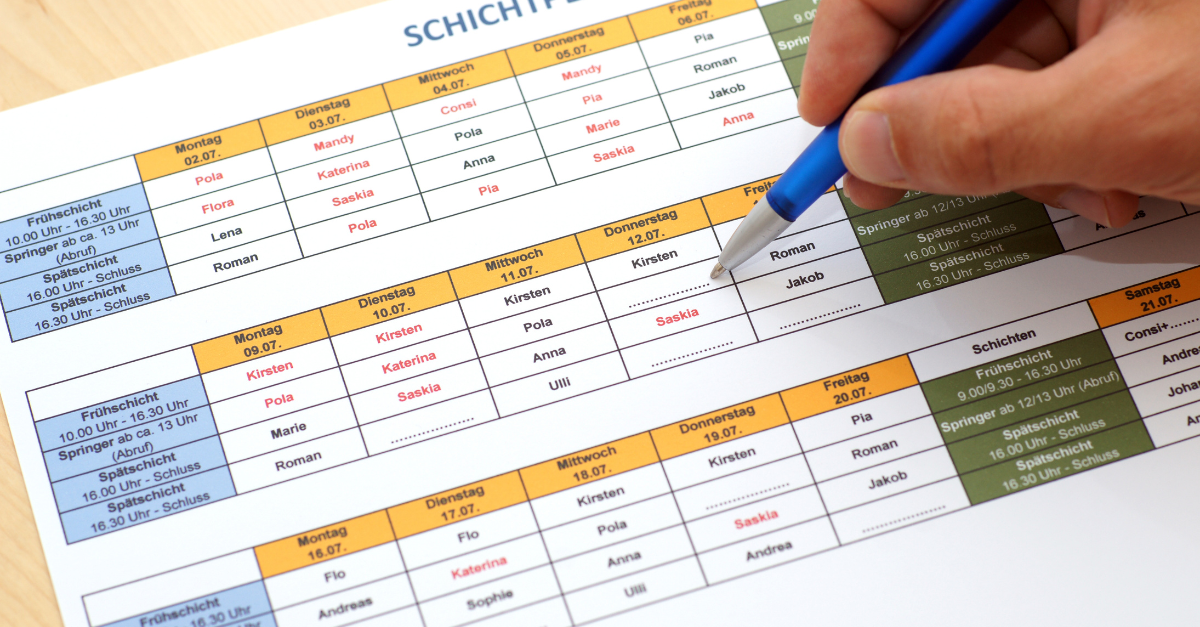
Rostero vs. Deputy: Which Scheduling Tool Fits Your Team?
Why would anyone look elsewhere? Because "recognized" and "right for your team" are two different things. If you're evaluating Deputy and want an honest side-by-side comparison, including where Rostero does things differently and where Deputy still has an edge, this is the right place to start.

How to Handle Last-Minute Shift Coverage Without the Group Text Chaos
Handling last-minute shift call-outs doesn't need to be hard. Our guide walks through a practical approach for handling last-minute shift coverage fast, one that doesn't depend on group texts, good memory, or luck.

5 Tips For Managing Seasonal Scheduling
Managing seasonal shift patterns effectively requires an intentional blend of predictive forecasting, automated communication, compliance tracking, cross-training frameworks, and formalized post-season review.

The 2026 Manager's Playbook: Mastering Shift Swaps Without Chaos
A tactical guide to implementing self-service shift swaps while keeping payroll, compliance, and team morale intact.

How to Cut Scheduling Time by 85% Without Cutting Corners
Proven workflows, templates, and automations that modern managers use to reclaim their week.

The Hidden Cost of "Buddy Punching" (and How to Stop It)
What photo verification and geofencing can do for your bottom line, with real-world numbers from retail leaders.

Healthcare Rosters Under Pressure: A Field Guide
Lessons from ward managers on balancing fatigue prevention, credentialing, and 24/7 coverage.
Ready to put these strategies into practice?
Experience the best employee scheduling software for yourself.